Standing by the Ruins III
2025
Standing by the Ruins is a title borrowed from an early pre-Islamic poetic form: wuquf ‘ala al-atlal, known as “ruin poetry”. This motif is believed to have originated in the 6th century, with Imru’ al-Qais, the last king of the Kindite kingdom in the Arabian Peninsula, who lived in exile. Considered one of the greatest figures of Arabic literature, his most famous poem describes a character longing for his beloved while looking at a devastated campsite. With this, he became the precursor of a style that is still relevant today, a genre that reflects on love and loss, on destruction and the passage of time, through the lens of abandoned, destroyed or vanishing places.
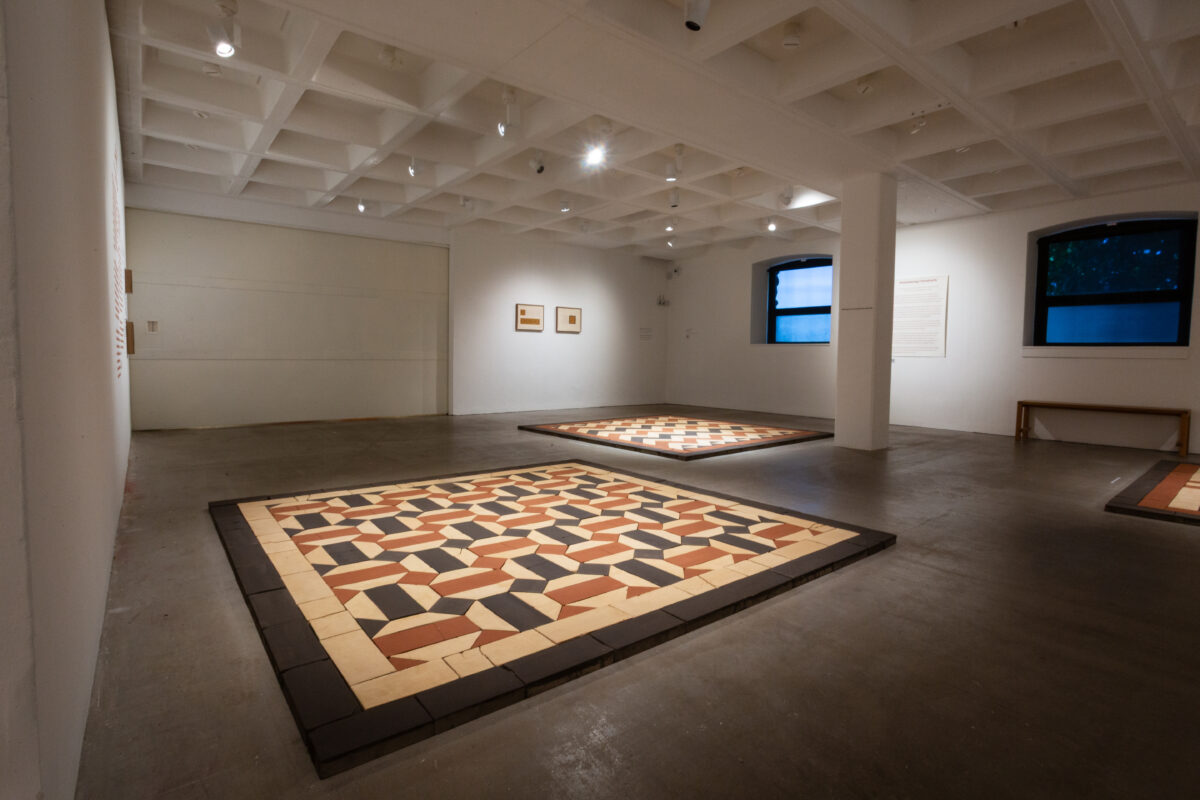
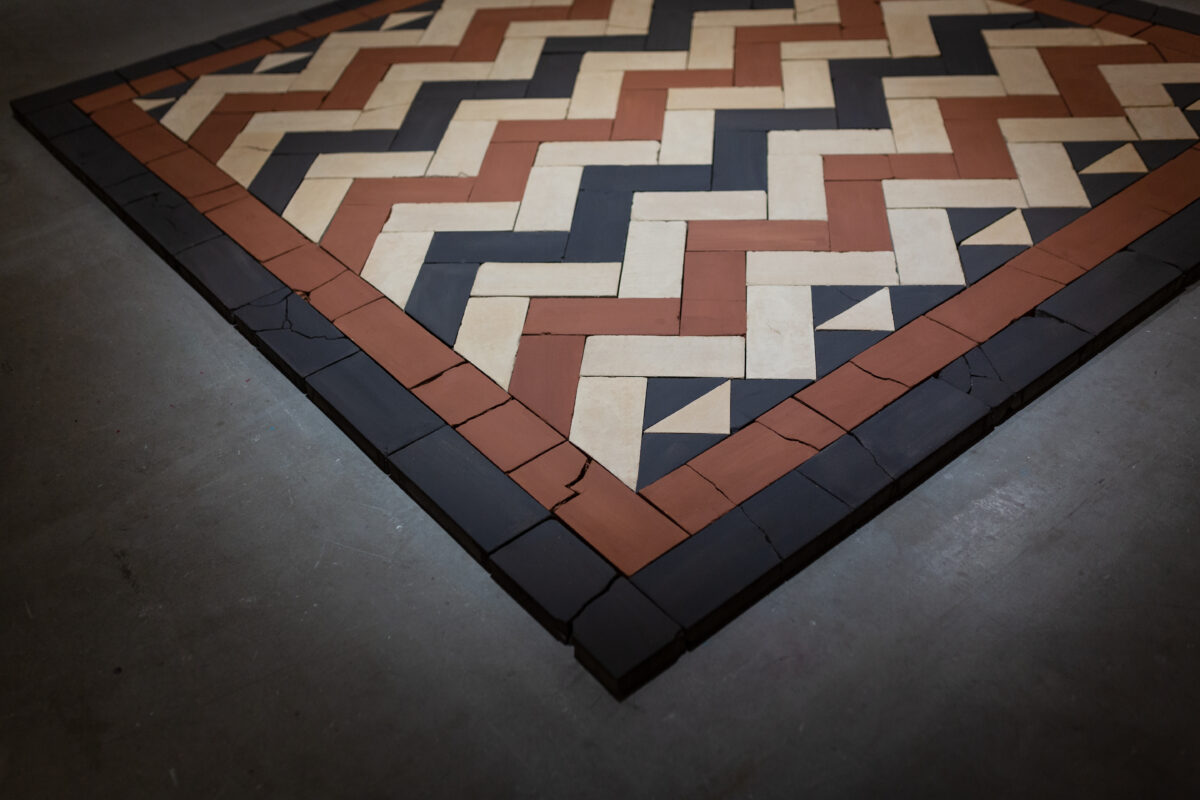
Awartani’s series of floor pieces gives ruin poetry a physical body: a melancholic visual requiem, these works are composed of hand-made clay bricks, produced in collaboration with artisans from various part of the North Africa, Southwest, and Central Asia region, who use ancient traditional techniques. This transfer of knowledge lies at the heart of the artist’s practice. By reclaiming ancestral know-how before it is lost to us, she strives to safeguard intangible heritage.
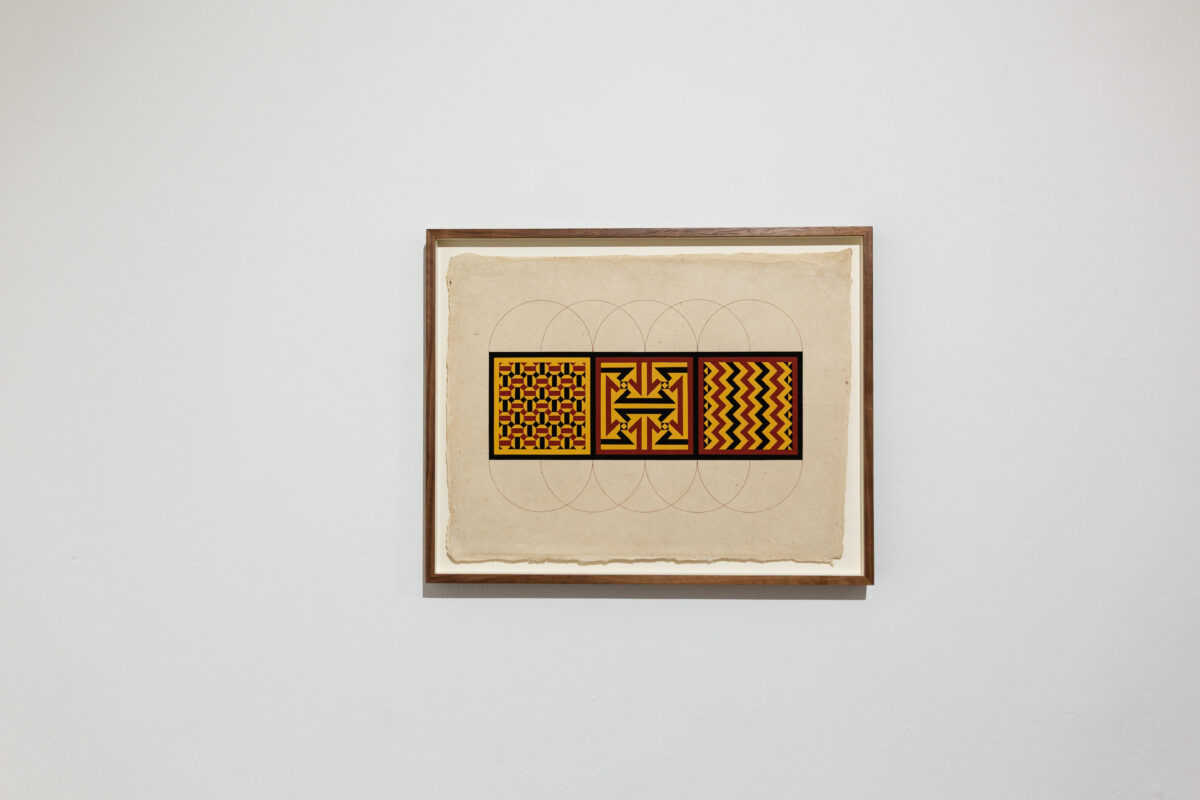
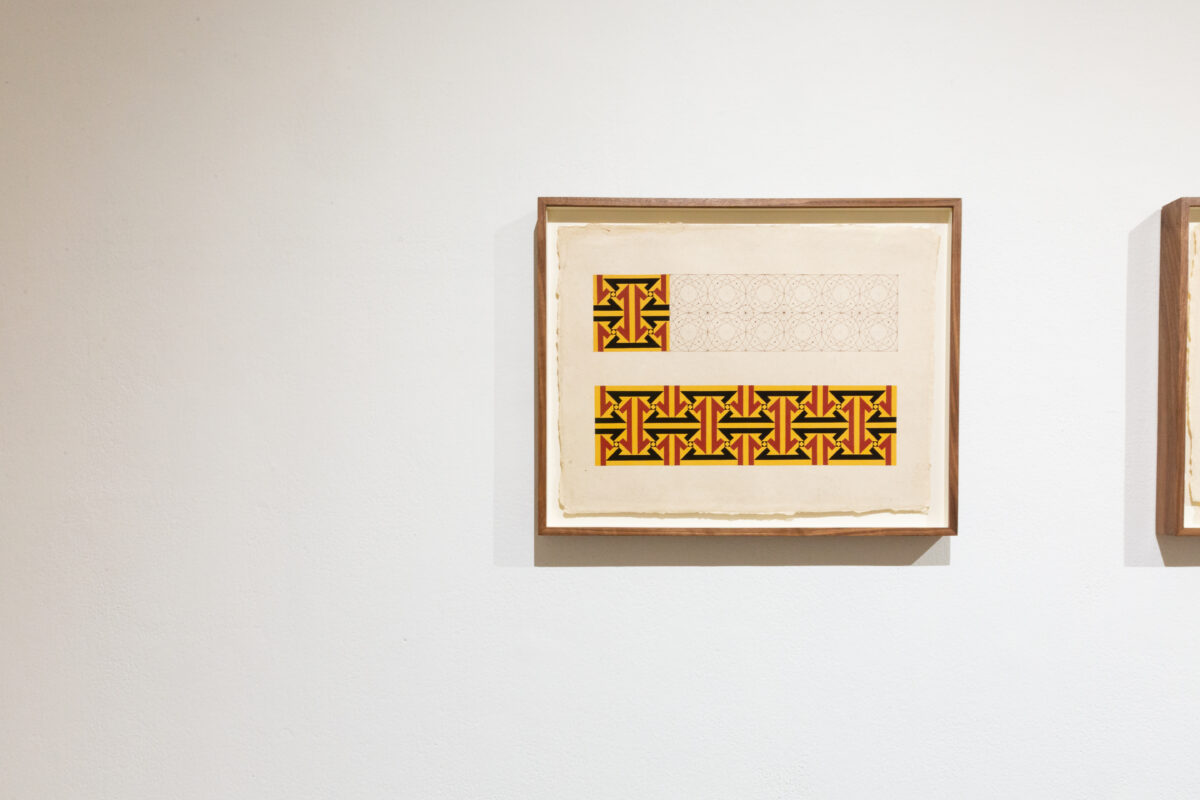
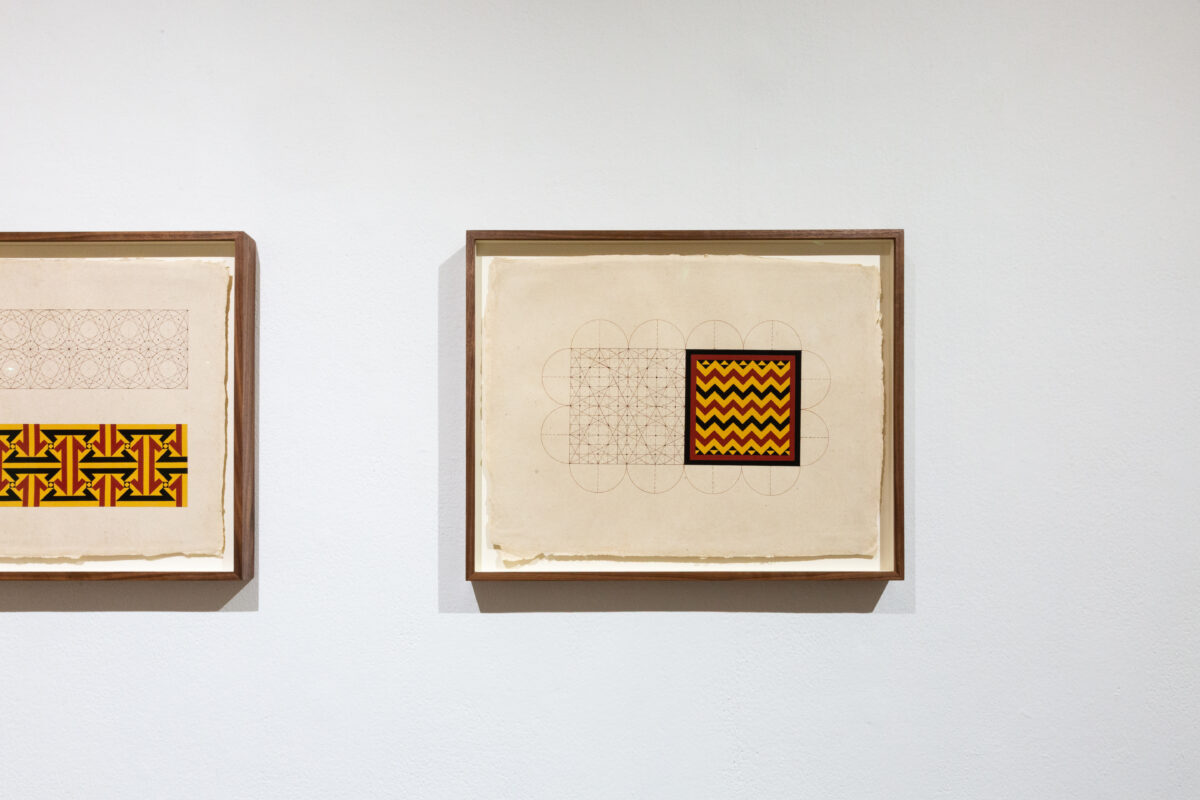
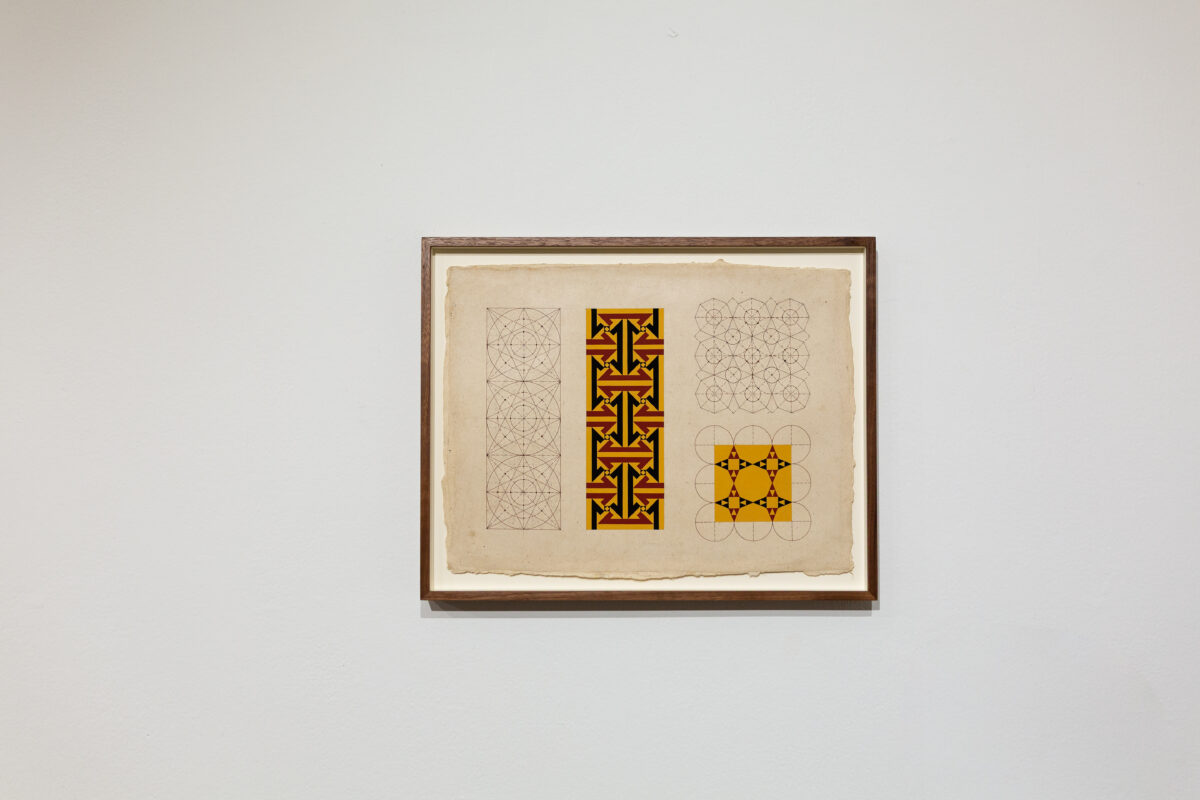
Assembled to look like traditional patterns, the tiles in the work always replicate specific geometric architectural details, selected through a systematic study of endangered landmarks monuments and buildings, in an attempt to retain traces of disappearing places.
In this edition of the Standing by the Ruins series, Awartani used as a reference the original floor of Hammam al-Sammara, a traditional public bathhouse in the old city of Gaza, dating back to 1320 during the Mamluk period, which was still operational until it was destroyed by Israeli airstrikes in December 2023. The installation in three parts documents various patterns that adorned the ground of the Hammam that no longer exist.
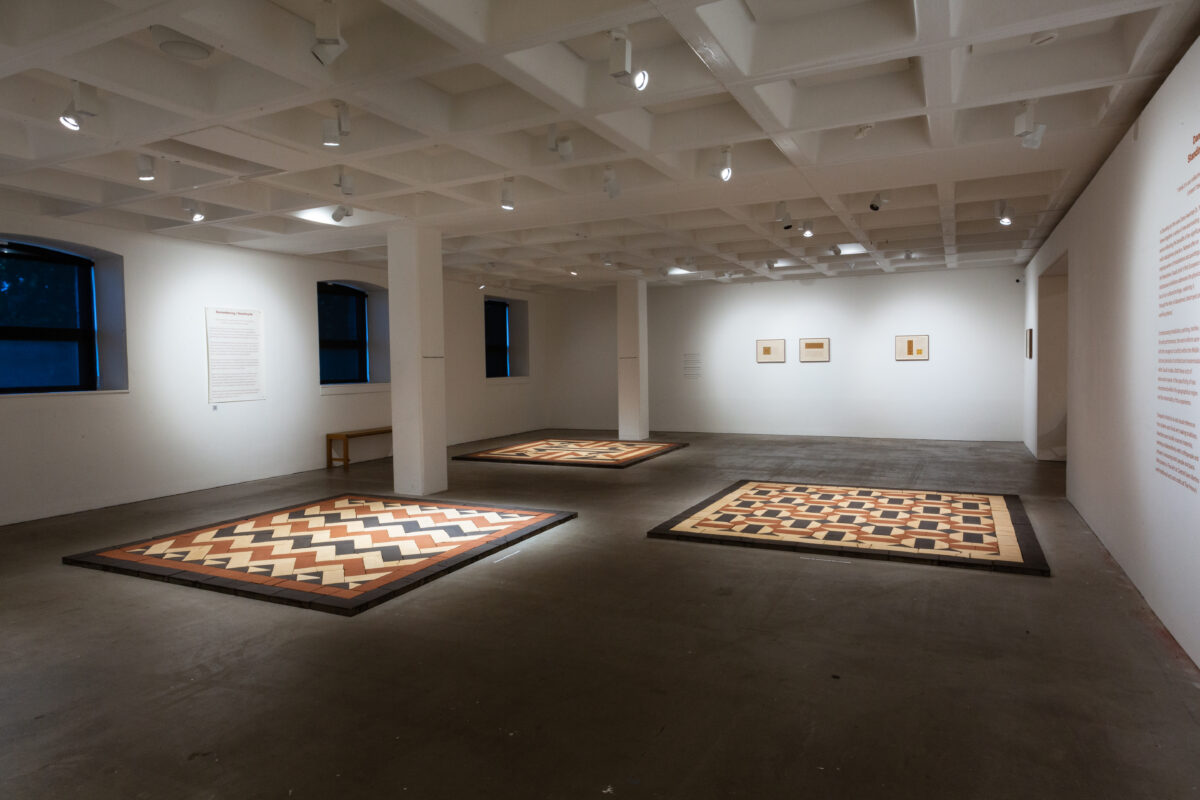
Installation view of ‘Standing by the Ruins III’’, Arnolfini, 2025, © Dana Awartani, Photography by Lisa Whiting.